Entretien avec : Sage Toda-Nation de YMC
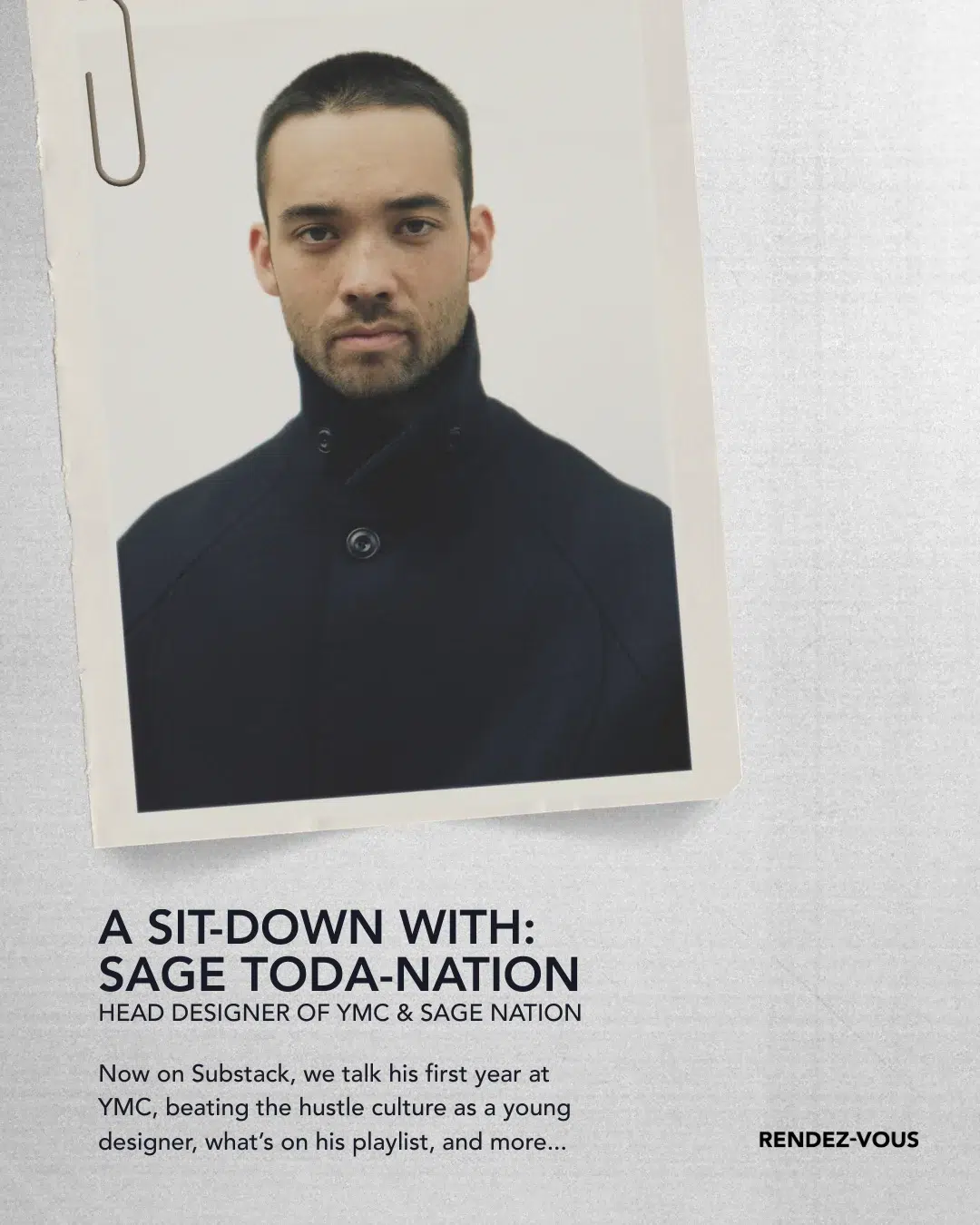
Il est rare qu'une marque utilise un appel à l'action comme nom, plutôt que de faire référence à une personne, un lieu ou un objet. Cependant, il y a certaines personnes qui pensent que certains d'entre nous doit La créativité n'est pas seulement une chose que l'on peut exploiter, c'est un état d'esprit. Telle est la philosophie de Jimmy Collins et Fraser Moss, et la raison pour laquelle ils ont lancé leur projet YouMustCreate en 1995. Ce qui les a motivés, ce n'est pas nécessairement l'idée de créer une ligne de vêtements, mais leur réflexion constante sur la créativité elle-même.
La paire n'était pas des "mecs de mode" au sens traditionnel, mais ils étaient profondément ancrés dans la scène DIY post-punk de Londres de l'époque. Leur connexion naturelle à ce monde de contre-culture, de musique pulsante et d'art progressiste a influencé une approche plus honnête du langage de conception de YMC. Collins et Moss n'étaient pas préoccupés par les tendances, leur objectif était de créer une ligne fonctionnelle et sobre. Les vêtements s'inspiraient des détails du vêtement de travail et des uniformes militaires, mais réaménagés en tenant compte de la polyvalence et des modes de vie de leur communauté.
Au cours des années 90 et au début du nouveau millénaire, ils ont connu le succès en tant qu'icône de niche, pour ceux qui connaissent, de ces mouvements culturels et de l'identité britannique. Après des années à développer la marque ensemble, Moss décéderait tragiquement en 2023. Désormais privés d'un cofondateur, d'un ami et d'un pilier créatif, Jimmy et l'équipe se sont mobilisés pour continuer à raconter leur histoire, dans l'esprit que Fraser aurait souhaité. Un nouveau responsable de la conception serait nécessaire pour aider à orienter le projet, et c'est là que la star montante, Sage Toda-Nation, a répondu à l'appel.

À tout juste 27 ans, Sage a déjà un sacré pedigree. En lançant sa marque éponyme, Sage Nation, pratiquement depuis sa chambre pendant le COVID, il correspond tout à fait aux valeurs de bricolage de la marque. Son penchant pour la fabrication de vêtements propres avec des détails fonctionnels intelligents, le fait qu'il soit basé à Londres et ses passions pour la musique et l'art ont également contribué à faire de cette décision une évidence pour tout le monde. Aujourd'hui, plus de 30 ans après le lancement d'YMC, une nouvelle perspective s'offre à nous, Sage insufflant son regard et son énergie à l'esprit de la marque, qui continue d'évoluer.
Avec l'héritage de la contre-culture des années 90 et une direction créative avec une touche de Gen-Z, la marque est dans une excellente position en 2026, renouant avec ses racines avec respect tout en continuant à la projeter vers l'avenir. Ceci étant dit, nous sommes ravis de présenter la marque pour la première fois chez RENDEZ-VOUS STORE. En prélude à notre premier drop avec la marque, il y a quelques semaines, nous avons eu l'occasion de nous asseoir avec Sage lui-même dans leur showroom de la Fashion Week pour jeter un regard plus approfondi sur comment et ce qu'il fait chez YMC, et discuter un peu de son processus de création, de la lutte contre la "hustle culture" et, bien sûr, échanger quelques recommandations musicales.
Commençons cette conversation avec Sage Toda-Nation du YMC.
RDV : Nous sommes ravis d'accueillir bientôt YMC à Rendez-Vous. 2025 semblait être une année importante pour la marque qui célèbre ses 30 ans, et pour vous personnellement ! Comment s'est passée votre intégration dans votre rôle de directeur du design, juste un an après tant de changements ?
STN : Ça a été vraiment bien. Évidemment, il y a beaucoup de choses à faire en même temps et à équilibrer — c'est comme un exercice d'équilibriste ! Mais nous avons une très bonne équipe chez YMC qui est habituée à faire ce qu'elle fait, elle est solide, ce sont des gens très agréables avec qui travailler. Je pense que cela signifie que je peux arriver et apporter ce que je fais à l'équation sans avoir besoin de toucher à l'infrastructure, ce qui est un avantage énorme. Au début, il s'agissait aussi de s'habituer à la marque, de s'habituer à l'héritage et à l'histoire. Au fil du temps, nous avons commencé à injecter ma philosophie et ce que je fais davantage dans la marque, petit à petit. Mais, comme vous le savez, YMC a toujours été une marque axée sur le perfectionnement de la garde-robe moderne, donc chaque saison est une évolution, pas une recréation.
Votre réponse s'enchaîne parfaitement à ma prochaine question. Pour vous, en tant que directeur créatif en 2026, quel est l'éthos de la marque ? Comment décririez-vous son style ?
Pour ma part, je pense à Fraser, qui était directeur de la création avant moi et qui est malheureusement décédé. Il s'agit avant tout d'honorer sa vision de la marque et d'essayer d'entrer dans son esprit. La marque a démarré avec une éthique très DIY. Elle était vraiment ancrée dans l'ère post-punk, quand les gens voulaient des vêtements utilitaires, sportifs, mais qui avaient quand même l'air bien, qui avaient quand même l'air durs. Je suppose que le nom "YouMustCreate" évoque cette sorte de personne qui crée sa propre identité dans le monde. Il est donc également ouvert à l'interprétation. C'est pourquoi nous évitons les graphiques, les imprimés et les logos, parce qu'il s'agit de vous intégrer dans votre monde. C'est vous qui devez créer votre monde. D'un point de vue esthétique, il s'agit donc de s'inspirer des archétypes de base, trench-coats, denims, vestes de camionneur, vestes militaires, vestes de corvée, etc. et de les adapter à notre façon. Je pense que c'est quelque chose qui semble aujourd'hui "déjà fait". Mais nous étions en avance sur notre temps en ce qui concerne ce style dans les années 90. Je pense que les marques se sont progressivement démocratisées et qu'avec le temps, elles attirent un public plus large, une tranche d'âge plus étendue - grands-parents, petits-enfants, parents, femmes, hommes. Je pense que c'est vraiment une marque pour les gens. Pour moi, il s'agit de garder cela à l'esprit. Je pense que certains designers et certaines marques essaient de ne pas trop penser au client. Mais chez YMC, nous pensons réellement au client.
Mais dans ce sens positif, où vous vous demandez : "Qu'est-ce que notre client veut vraiment porter et qu'est-ce qui lui serait utile ?""
Oui, et « quels sont ces personnages que nous construisons ?» Il ne s'agit pas de dire que nous essayons de suivre les tendances. Il s'agit plutôt de penser aux gars que nous connaissons, qui sont ces personnages qui existent aussi dans l'histoire de la marque. Comme un gars qui allait en rave et qui a maintenant deux enfants et qui vit dans l'East London, vous voyez ?
Voyez-vous, c'est aussi ce que je voulais savoir. Qui sont certains de ces porteurs archétypaux de YMC ?
Nous avons certainement beaucoup d'architectes, beaucoup de designers d'intérieur. Nous avons beaucoup d'artistes. Nous avons beaucoup de musiciens. Je pense que nous avons aussi beaucoup d'employés de bureau, vous savez, de cols blancs, qui veulent être un peu classiques avec une touche d'originalité. Donc, je pense qu'avec YMC, une chose très importante est que nous ayons toujours un léger sens de l'humour, ce qui est très britannique. Nous ne nous prenons pas trop au sérieux, mais en même temps, nous faisons de très beaux vêtements.
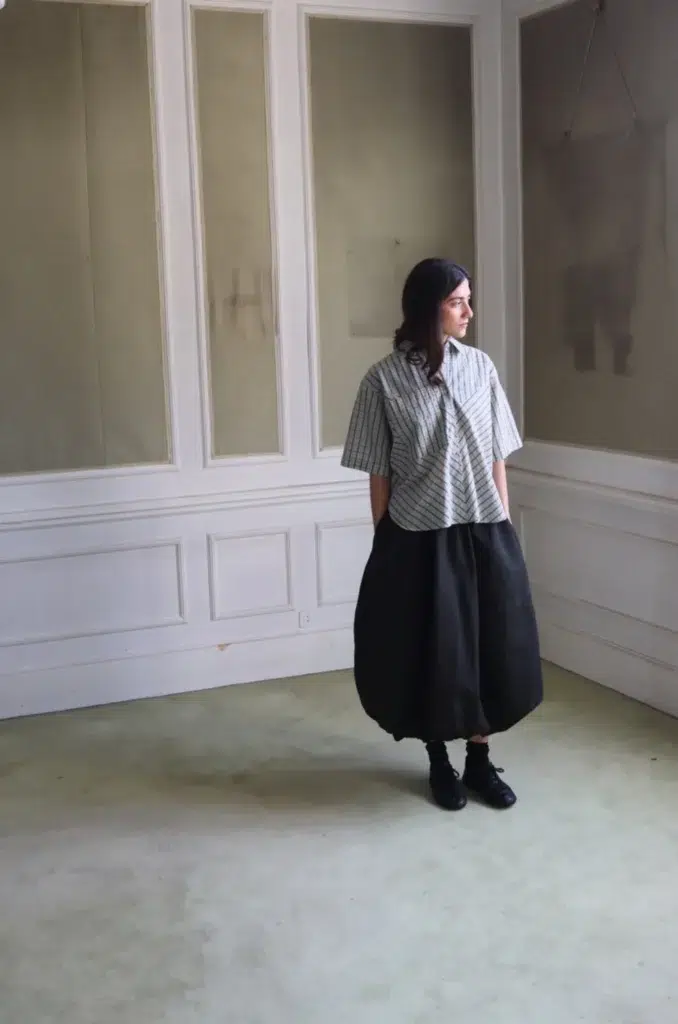
Cela semble être l'essence même, créer des pièces qui durent et qui sont belles ; des vêtements dans lesquels vous êtes censé vivre votre vie.
Exactement, et je pense que c'est vraiment l'énergie de YMC, surtout quand j'ai rejoint. Des vêtements pour vivre votre vie. Jimmy, le propriétaire, incarne cette mentalité. Chez YMC, les gens sont plus importants que les vêtements. On ressent vraiment cela quand on travaille pour eux.
J'ai l'impression que dans l'industrie d'aujourd'hui, on regarde autour de soi parfois et on se dit : « Wow, il y a beaucoup de gens qui se déguisent, mais peu qui s'habillent pour leur vraie vie ? » Il semble que YMC, du moins, essaie de faire l'inverse et de promouvoir un peu plus l'authenticité.
Pour moi, la meilleure preuve en est que nous avons des gens qui portent la marque depuis longtemps et qui ont encore dans leur garde-robe des pièces datant d'il y a 20 ans. C'est le compliment ultime. Je pense que lorsque l'on parle de YMC à de nombreuses personnes, elles se souviennent d'une pièce qu'elles ont dans leur garde-robe et avec laquelle elles ont grandi dans leur vie. Je pense que c'est souvent le cas avec les meilleures marques. Je n'essaie pas de faire dans le gadget, parce qu'en réalité, nous aimons avoir des idées, mais nous sommes très commerciaux dans le sens où nous développons notre gamme de produits de base. En général, vous avez des points de contact, des paramètres, et vous pouvez jouer avec eux. Normalement, environ 20% de ce que nous faisons est ce genre de "jeu". Nous avons nos points forts, comme le fait que la marque est implantée au Royaume-Uni depuis longtemps, et nous sommes donc très liés à cet héritage. Fraser aimait beaucoup la musique, peut-être plus que les vêtements. C'est donc une influence qui s'est exercée sur la marque, et c'est quelque chose que j'essaie d'exploiter, en utilisant des références culturelles réelles lorsque je "joue", au-delà des archives de la pièce elle-même.
IN'est-il pas drôle de constater que des personnes exerçant d'autres professions peuvent parfois être plus influentes dans notre monde, ou simplement plus intéressantes à observer d'un point de vue mode, en raison de leur position extérieure à « l'industrie » ?
Oui, 100% ! Il était très proche, par exemple, de Ian Curtis de Joy Division et de Mark E. Smith de The Fall, deux types de post-punk qui sont des groupes emblématiques de cette époque. Ils s'habillaient de manière très, faute de mieux, "normale". Par exemple, ils venaient du bureau pour faire leurs concerts. Ils devaient travailler dans un bureau de poste et se présentaient avec leurs chemises blanches et leurs pantalons plissés pour donner leur concert. Je pense que c'est un peu l'ambiance. Chez YMC, nous faisons des chemises très simples et de beaux pantalons, mais l'expression et la créativité sont davantage ancrées dans la personne qui les porte. Je pense que c'est ce que nous sommes en tant que marque. Nous n'essayons donc pas de réinventer la roue avec nos pièces.
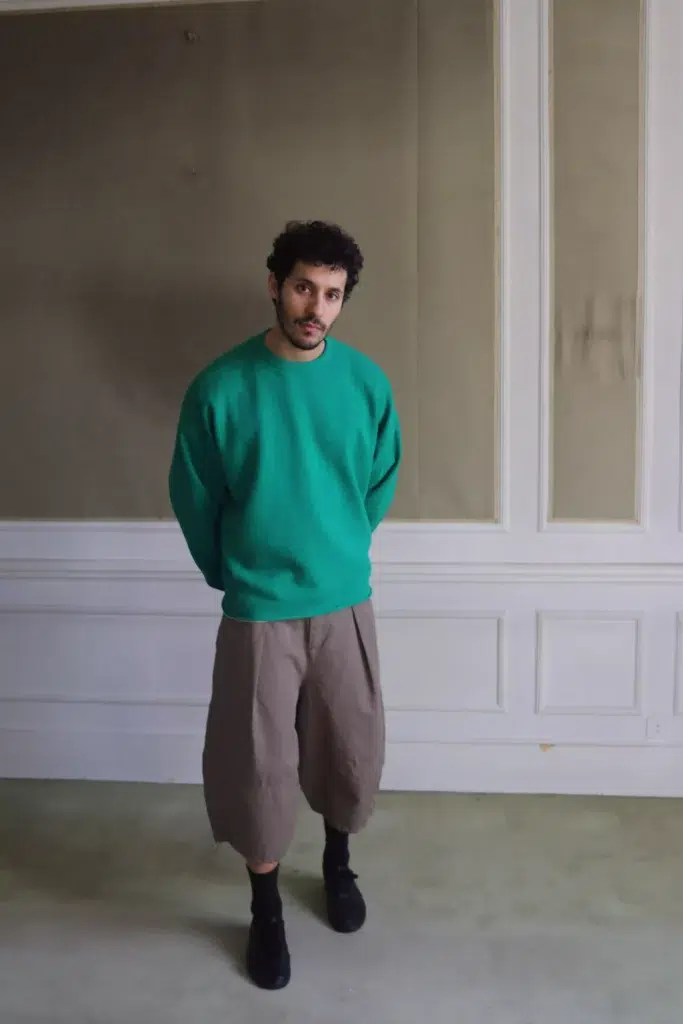
Pour passer au sujet suivant, vous avez un peu mentionné l'équilibrage entre le travail chez YMC et votre propre marque en même temps. Ma question est, mec, est-ce que tu dors ?
Ha ha, je dors bien et je travaille du lundi au vendredi, de 9h à 17h. Quand j'ai lancé ma marque, j'étais disponible tout le temps. Ma marque est maintenant arrivée à un point où elle est plus stable avec une bonne équipe. Les choses difficiles sont prises en charge, et j'ai beaucoup travaillé pour en arriver là. Bien sûr, c'est toujours du travail acharné, mais beaucoup moins chaotique. J'ai aussi appris que vraiment, si vous ne pouvez pas faire votre travail dans les 9h-17h, cinq jours par semaine, alors quelque chose ne va pas. Soit vous procrastinez, soit vous faites la mauvaise chose.
Très sage, Sage. Ensuite, lorsque vous entrez en mode travail, surtout avant de commencer une collection, décrivez-moi votre processus. Par où commence-t-il pour vous ?
Cela commence par quelques références que nous pourrions introduire de manière plus générale, puis il s'agit de revenir à des pièces de référence que j'ai trouvées et que j'aime. Je puise également dans mes archives personnelles : les styles que j'ai créés depuis le premier jour. J'aime regarder de manière très introspective ce que nous faisons réellement. Je regarde cinq pièces que nous avons réalisées il y a 20 ans au YMC et je me demande comment nous pourrions les reproduire en 2026. J'essaie de ne pas trop regarder à l'extérieur pour le CMJ. Je pense que j'aime travailler avec des restrictions. Si vous me disiez "Oh, cette saison, nous ne pouvons utiliser que trois tissus", j'adorerais.
C'est intéressant ce que vous dites, je suis d'accord que parfois, simplifier peut mener à encore plus de créativité. En tant que personne qui pousse le design minimaliste tout en essayant de le garder intéressant, comment trouvez-vous l'équilibre ?
Je pense que dépouiller peut certainement vous rendre plus concentré. Cela vous fait remarquer des choses que vous ne voyiez pas auparavant. Ma façon de travailler est très axée sur le corps.. J'ai travaillé avec d'excellents modélistes et j'ai collaboré très étroitement avec eux. Nous examinons les mesures les plus fines pour savoir où placer une poche, où placer un bouton, où placer une couture. Donc, je suppose que lorsque les choses deviennent vraiment minimales, il faut encore plus d'attention aux détails. Au Japon, il existe une règle appelée la "règle du point unique" où vous avez un point d'intérêt et vous construisez autour de lui. J'adore ça et je pense que c'est dans l'ADN de YMC. Si vous revenez aux débuts, c'est une marque plutôt axée sur un point unique.
Nous avons un peu parlé de vos références culturelles, qu'est-ce qui a spécifiquement été sur le mood board pour YMC en 2026 ? Des musiciens, des références, des photographes, des livres particuliers, etc. ?
J'adore me plonger dans les anciennes séances photo que d'autres magazines ont faites pour YMC à l'époque. Nous avons une archive massive de centaines de magazines présentant des éditoriaux avec la marque. Les images sont tout simplement incroyables. La saison dernière, Printemps/Été 26, la « muse » était Leos Carax, le réalisateur de films français. Nous avons beaucoup regardé son style personnel. Mark E. Smith, le chanteur principal de The Fall, est une autre source d'inspiration en général.
Pour parler de musique, qu'est-ce qui a été sur la playlist récemment ? Parce que je sais que la musique est si importante pour la marque, et pour vous-même.
J'ai écouté les Stone Roses cette semaine. Je me déplace vraiment pour... eh bien, devrions-nous simplement regarder mes dernières écoutes ? Je vais partout. Je suis passé de Nina Simone à 50 Cent, à The Gap Band, à Nick Cave, à Chaka Khan, à Giggs, à Joni Mitchell, à Hype Williams et à Kelly Moran. Je ne sais pas si vous la connaissez, mais c'est une pianiste extraordinaire, avec un son psychédélique qui sort de l'ordinaire. J'aime beaucoup les groupes de jazz éthiopiens, comme Suicide, mais j'ai aussi grandi en écoutant de la drill et de la trap music. J'aime aussi Arthur Russell. Je ne connais personne dans notre génération qui s'en tienne à un seul "son".
Un mélange si éclectique, j'adore vraiment ça. Notre interaction actuelle avec la musique et la culture a tellement changé. Quand YMC a commencé, nous avions des sous-cultures et des looks distincts pour certains styles de musique. Maintenant, avec les réseaux sociaux et notre génération qui a grandi avec le streaming, chacun a son propre mélange personnel de références. Pensez-vous à ce changement lorsque vous concevez pour la marque ?
Nous ne nous inquiétons pas de cela. Nous allons continuer à faire ce que nous faisons, la marque existait avant moi et vous, et elle existait en dehors d'un monde dominé par Internet. Si les réseaux sociaux et tout le reste devaient disparaître dès maintenant, nous aurions toujours tout ce que nous avons construit sur quoi nous reposer. Alors, nous allons continuer à faire valoir notre style et à créer.